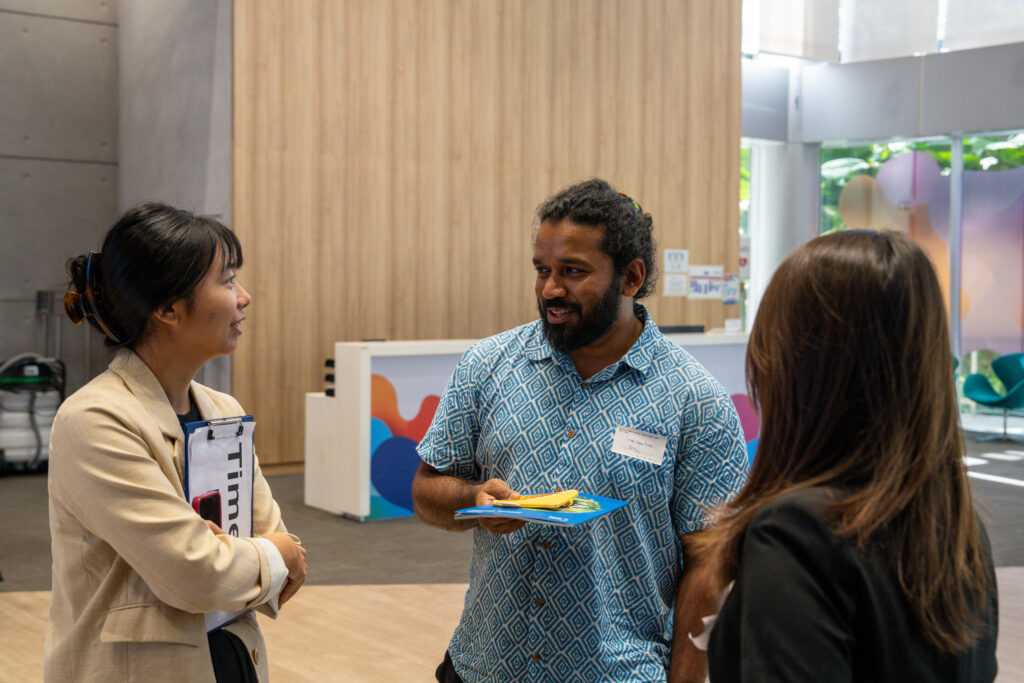
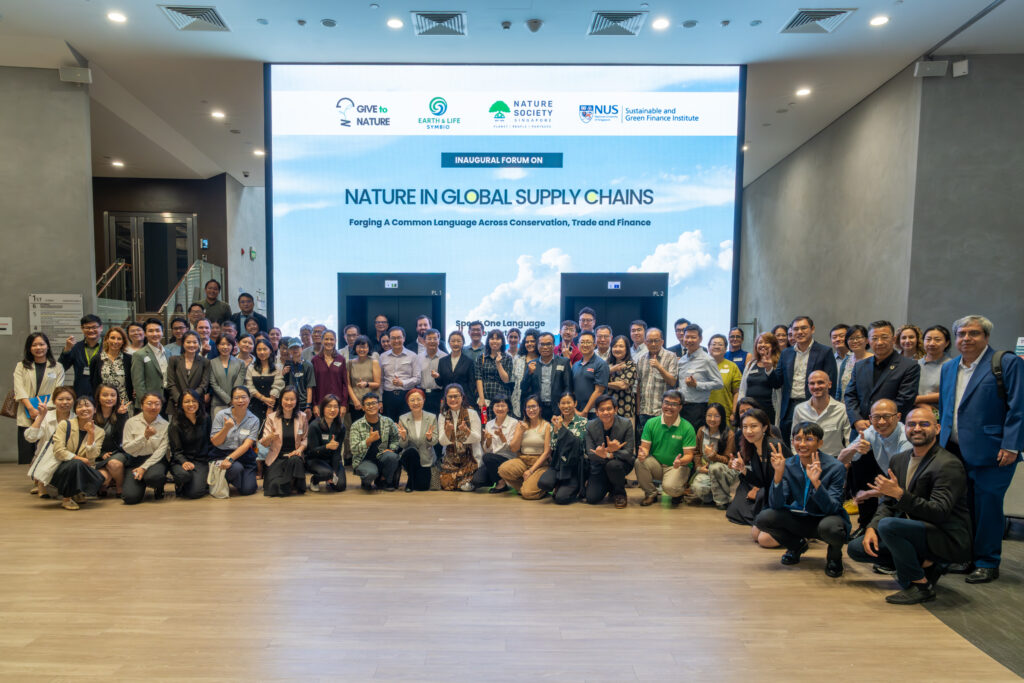
On April 1-2, Give to Nature co-hosted the Inaugural Forum on Nature in Global Supply Chains at NUS Innovation 4.0, bringing together leaders from conservation, finance, policy, and industry to explore how nature can be more effectively integrated into global supply chains and financial systems.
Co-organised with the Sustainable and Green Finance Institute (SGFIN) at NUS, Earth & Life Symbio, and Nature Society Singapore, the two-day forum convened over 20 speakers and practitioners under the theme: “Forging a Common Language across Conservation, Trade, and Finance.”
The forum featured a distinguished group of speakers, including Dr. Charlotte Germain-Aubrey (UN Cali Fund), Abigail Alling & Mark Van Thillo (Biosphere Foundation), Yuntong Yang (Geely Holding Group), Lihui Sun (Zhejiang Huayou Cobalt), Dr. Jun Ma (Institute of Public & Environmental Affairs), Tong Wu (Stanford University Natural Capital Alliances), Prof. Jin Sun (China Central University of Finance and Economics), and Eric Nietsch (MSCI), among others.
Nature as a Business and Financial Imperative
Across discussions, a clear message emerged: nature is increasingly recognised as a material driver of business performance and financial risk.
Companies shared how they are beginning to embed nature into strategy, governance, and value chains—through sustainability integration, certification and traceability systems, and ecosystem-based planning. Financial institutions highlighted growing awareness of nature-related risks, alongside the challenges of translating these risks into investment and lending decisions.
Policymakers emphasised the need for stronger frameworks to align incentives and reduce fragmentation, while conservation and scientific experts underscored the importance of translating ecological knowledge into practical, decision-useful insights grounded in local realities.
Key Barriers to Progress
Despite growing momentum, participants identified several persistent challenges that continue to constrain action:
- Fragmented frameworks, creating complexity for businesses operating across markets
- Inconsistent and non-comparable data, limiting risk assessment and capital allocation
- Misaligned incentives, where short-term financial pressures often outweigh long-term environmental considerations
These challenges point to a broader issue: while awareness is increasing, systems and tools have yet to fully catch up.
A Shared Language for Nature
A central conclusion of the forum was the need for a shared, operational “common language”—one that can translate nature into metrics and insights that are meaningful across conservation, business, and finance.
Bridging this gap will be essential to move from fragmented efforts toward more coordinated, scalable implementation.
From Dialogue to Action
On the second day, participants worked in breakout groups to identify practical pathways forward:
- Financing & Data: Addressing mismatches in deal size and return expectations, while improving data standardisation and linking ecological outcomes to financial value
- Policy: Enhancing coherence across regulatory frameworks and balancing compliance with incentives for nature-positive action
- Systemic Thinking: Tackling deeper structural barriers, including limited awareness, capability, and alignment across stakeholders
Across all groups, a common theme emerged: advancing nature finance requires alignment across data, policy, scale, and incentives.
Priority Actions
Participants identified several near-term opportunities to build momentum:
- Establish a shared data working group across public, corporate, and financial actors
- Translate global frameworks into practical guidance for small and medium-sized enterprises
- Publish case studies of bankable nature-positive projects
- Develop pilot collaborations linking communities, businesses, and finance
Looking Ahead
The forum marked an important step in advancing dialogue on nature in global supply chains. While progress is underway, participants acknowledged that translating ambition into implementation will require continued collaboration across sectors.
Give to Nature remains committed to supporting this transition—working with partners to strengthen data transparency, bridge science and finance, and help enable more informed and coordinated action for nature.