
After 3 delays, Jingwei and I finally made our trip to Cambodia and Laos this June to understand the supply chain of rubber, cassava, durian and other agricultural commodities and what are their relations to deforestation. For 2 weeks, we navigated the road circling Tonle Sap’s plain, then wandered the French-colonial town of Vientiane. Backed by our travel accompanies from the UK-aid InFIT program and WCS, we sat down with over 20 voices- from businesses, associates, NGOs, and research institutes.
What unfolded was a raw portrait of survival:
-
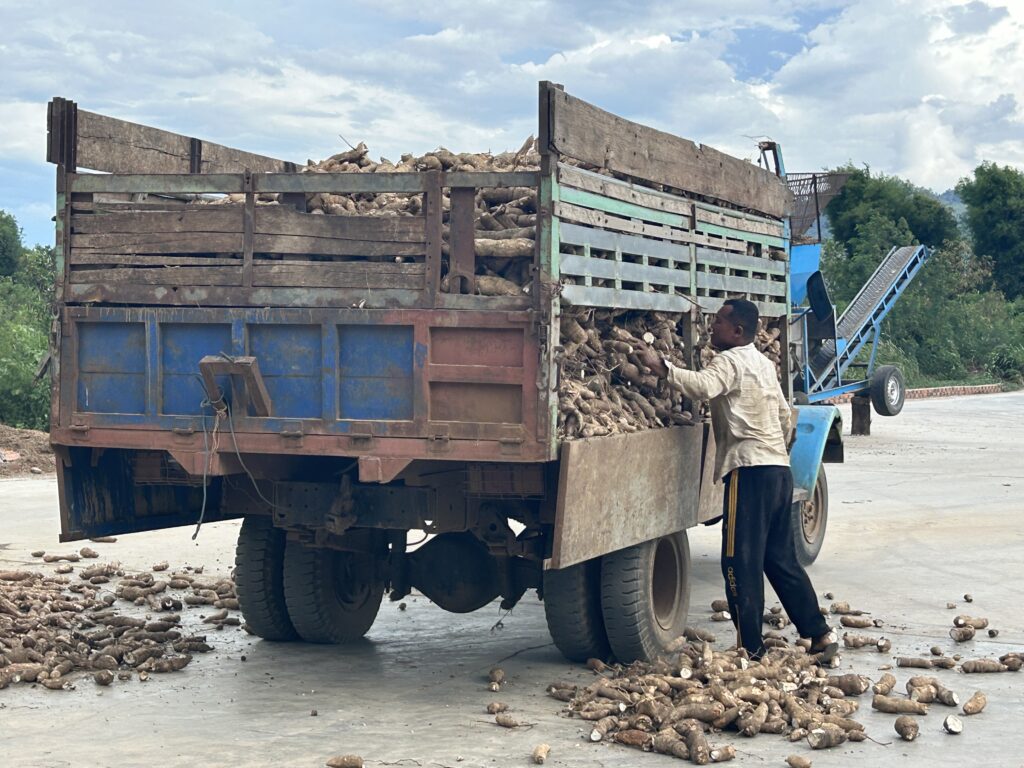
Chainsaws echoed where ancient trees stood days before. Smallholder farmers, trapped between volatile prices and corporate contracts, burn forests to plant cassava—not greed, but necessity.
-
In Laos’ misty highlands and Cambodia’s red-dirt plains, we saw raw commodities hauled straight to borders. Why? Crumbling roads, absent processing plants. Neighbors (Thailand, Vietnam) add value; here, poverty feeds the export of unprocessed harvests.
One truth haunts me: Deforestation isn’t policy failure—it’s arithmetic. No national planning. No safety nets. When cassava prices crash, forests become fields.
“Where’s the proof it can be different?” We dreamed aloud: A pilot supply chain—from EUDR-compliant latex to tires—traceable, ethical, profitable. A beacon to show how. Change the notebooks full of “what ifs” to “It is”.
Our journey closed in a Vientiane antique shop, its shelves heavy with three generations of Buddhas and war-era typewriters. As dust motes danced in lantern light, I traced a 12th-century Khmer carving—its gods serene, oblivious. How do nations with such profound pasts forge sustainable futures? The wood held no answers.